Built to move
A pouch can live in a pocket or gym bag. That solves preparation and portability; it does not make caffeine consequence-free.
A direct guide to the pouch format: what it is, what it can realistically do, what it cannot fit, and how to evaluate the caffeine dose before training.
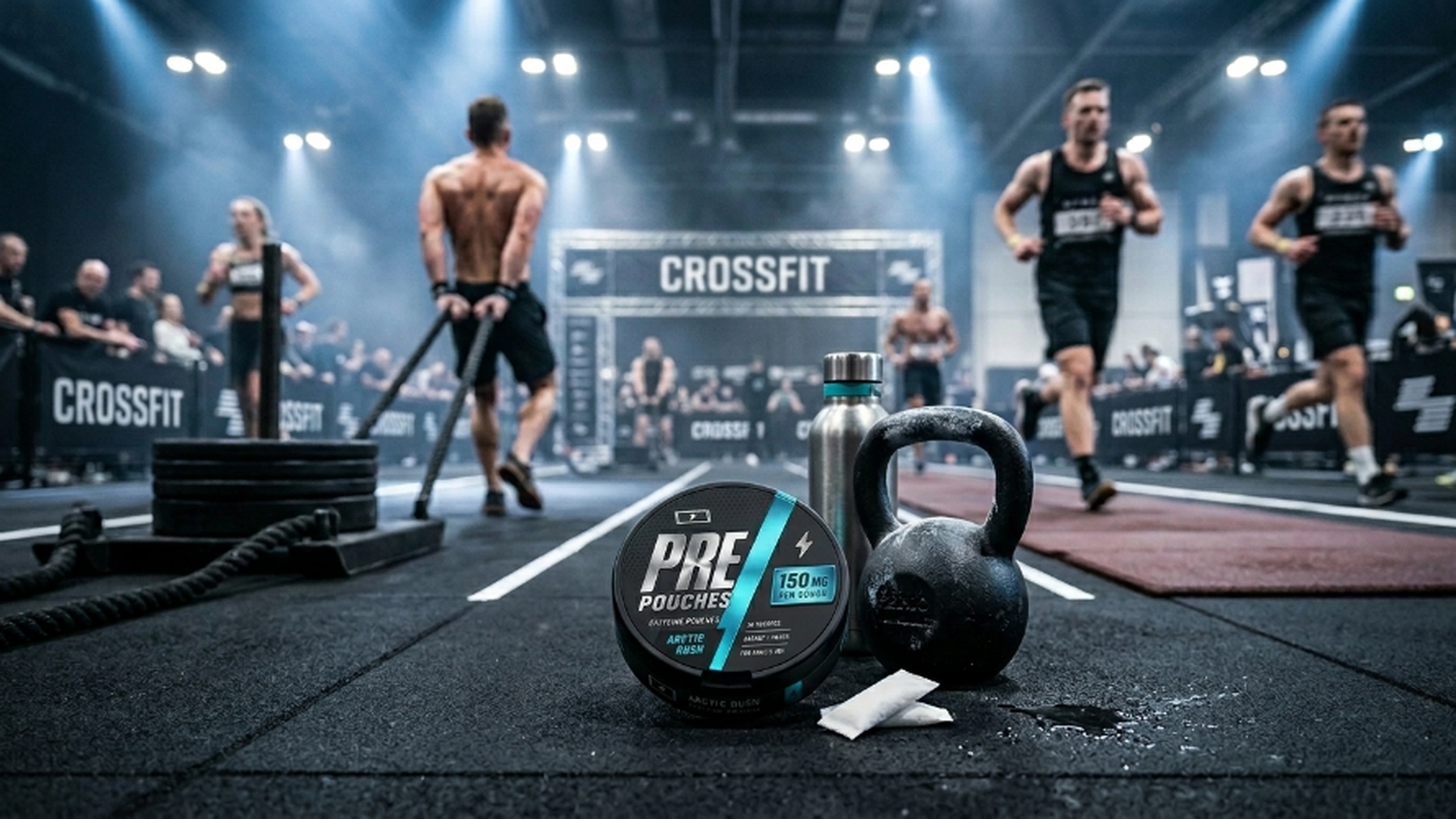
The pouch changes the delivery format, not the basic responsibility that comes with caffeine. The useful difference is practical: no powder to measure, no drink to mix, and no full bottle to carry into the session.
A pouch can live in a pocket or gym bag. That solves preparation and portability; it does not make caffeine consequence-free.
Compare milligrams per pouch with coffee, energy drinks, supplements and anything else consumed that day. Total intake matters.
Caffeine has substantial research in exercise settings, but results and side effects vary by person, dose, timing, sleep and habitual use.
A pouch can cover a compact energy-and-focus formula. Powder has far more physical room for ingredients normally measured in grams. The honest comparison is format and ingredient capacity, not a blanket claim that one is better.
Portable; no mixing or drink required.
Usually requires a scoop, water and shaker.
One manufactured pouch can present a fixed labeled serving.
Depends on the labeled scoop and how accurately it is measured.
Best suited to compact actives measured in milligrams or micrograms.
Can carry gram-level ingredients such as creatine, citrulline, carbohydrates and electrolytes.
A pouch is not automatically faster, safer, stronger or easier on every person.
A powder is not automatically more complete or effective; the actual formula and dose decide.
The current PRE POUCHES launch specification is designed around a clearly disclosed caffeine dose and ingredients that fit the physical constraints of a pouch.
Current launch specification, not individualized advice. Final product directions, testing, warnings and labeling remain subject to manufacturing validation and regulatory review. See the complete formula page.
The research base supports caffeine as an exercise-performance aid in many, but not all, studies.[1] It also shows substantial individual variation and a higher incidence of side effects at very high doses.
The ISSN position stand reports benefits across several performance outcomes, while noting differences related to genetics, habitual intake, anxiety, sleep and individual response.
Sports studies often express caffeine relative to body weight. That does not turn a research range into a universal serving recommendation.
A pouch does not exist in isolation. Coffee, tea, energy drinks, medications and other supplements can all contribute to total caffeine.
The FDA has cited 400 mg per day as an amount not generally associated with negative effects for most adults, while emphasizing that sensitivity varies.[2] That is not a target and does not mean every adult should consume that amount.
Read the stated milligrams for one pouch.
Container totals and serving totals are not interchangeable.
Add coffee, tea, drinks, medication and supplements.
Stacking products can make the true daily total easy to miss.
Follow the finished product label and do not exceed directions.
Children, people who are pregnant or nursing, caffeine-sensitive individuals and people with relevant health concerns should avoid use or seek professional guidance.
These sources provide context for general caffeine guidance, exercise research and the role of vitamin B12. They do not endorse PRE POUCHES.
A pre-workout pouch is a small oral pouch containing functional ingredients such as caffeine and focus-support ingredients. It is designed as a portable alternative to mixing a powdered drink before training.
It can replace the energy-and-focus portion for some people, but a small pouch cannot carry gram-level amounts of common pump, hydration or carbohydrate ingredients. The right format depends on what the user expects the product to do.
The current launch specification contains 150 mg of caffeine anhydrous per pouch. The finished product label, directions and warnings will control actual use.
PRE POUCHES does not make a universal faster-onset promise. Onset can depend on formulation, delivery, use, individual physiology and what else has been consumed. The reliable comparison is preparation: a pouch requires no mixing.
The terms refer to different active ingredients. Consumers should inspect the finished label for caffeine, nicotine and every other active rather than assuming all oral pouches contain the same thing.
PRE POUCHES is building a portable energy-and-focus format around a clearly disclosed launch formula. Join first access while the finished product moves through validation.